An aneurysm is a small balloon-like bulge in the wall of an artery inside the head. Many stay silent for years and are found by chance on an MRI done for headaches or dizziness. The worry is that a bulge can burst and bleed into the space around the brain. That bleed, called a subarachnoid haemorrhage, is a medical emergency.
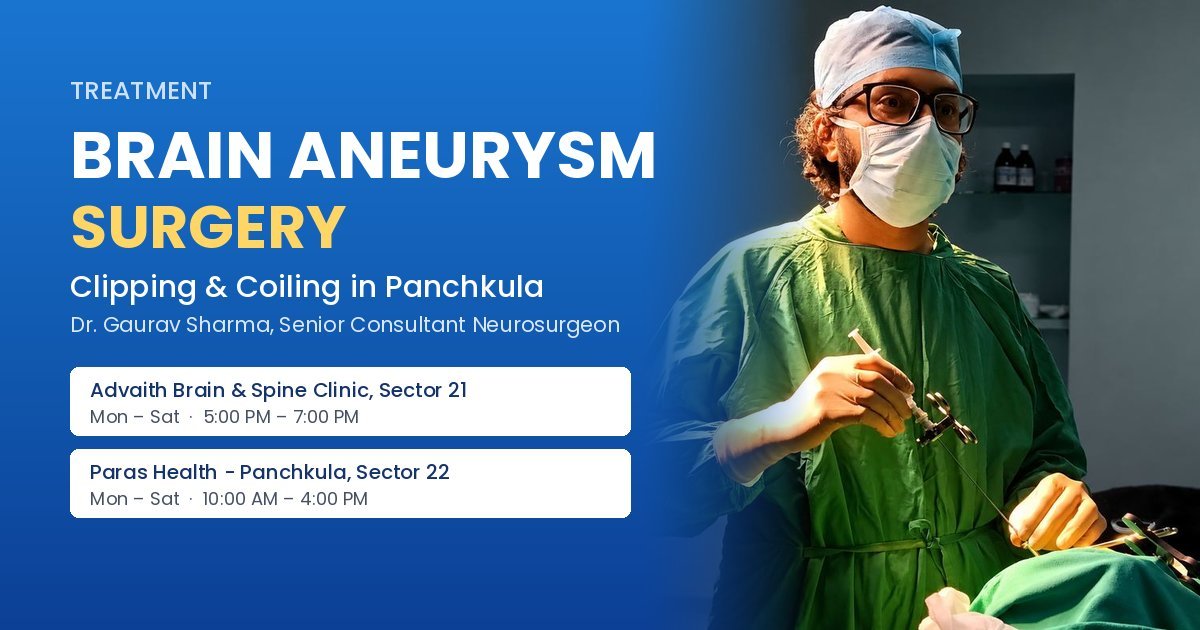
Dr. Gaurav Sharma, Senior Consultant Neurosurgeon in Panchkula, treats both ruptured and unruptured aneurysms. Whether an aneurysm should be treated, and how, depends on its size, shape, position and the patient's age and health.
People who have had a ruptured aneurysm often describe it the same way: a sudden, explosive headache, the worst of their life, reaching full strength within seconds. It may come with vomiting, a stiff neck, fainting, a fit or blurred vision. This is not a migraine to be slept off. Call an ambulance or go to the nearest emergency department straight away.
Unruptured aneurysms usually cause no symptoms at all. A large one can occasionally press on a nerve and cause a drooping eyelid or double vision.
A CT scan shows bleeding. A CT angiogram or MR angiogram then maps the blood vessels. In many cases a catheter angiogram (DSA) is done for the clearest picture of the aneurysm's neck and shape, and this helps decide between the two main treatments.
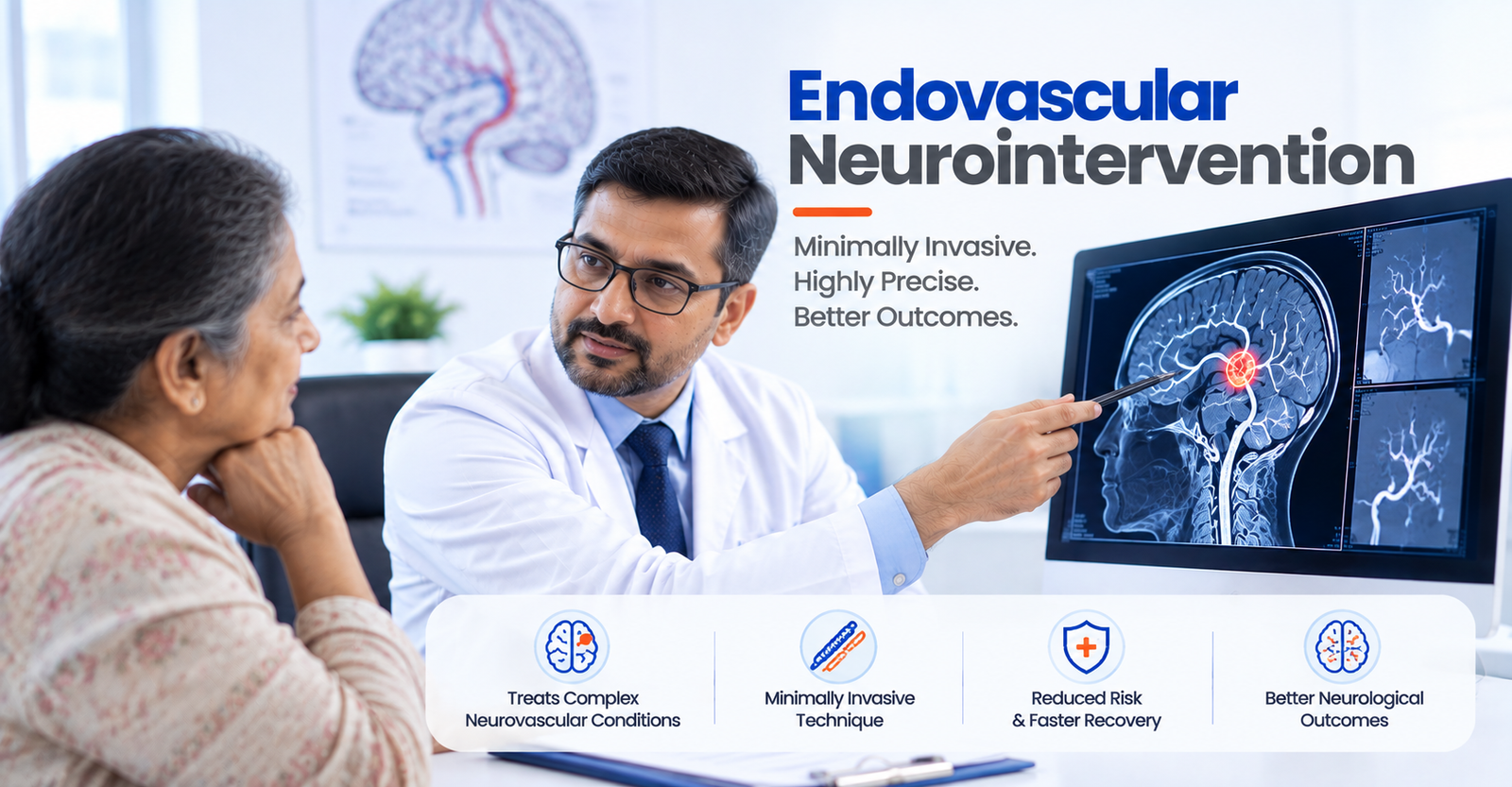
A thin tube is passed from an artery in the groin or wrist up to the brain. Soft platinum coils are packed into the aneurysm so that blood no longer flows into it. There is no opening of the skull. Some aneurysms with a wide neck need a supporting stent or a flow-diverting stent along with coils. More about this approach is on the endovascular neurointervention page.
Through a craniotomy, the surgeon reaches the aneurysm under a microscope and places a tiny titanium clip across its neck, sealing it off from the artery. Clipping is often chosen when the shape of the aneurysm does not suit coiling, or when a large blood clot also needs removing.
Neither method is better for everyone. The choice is explained to the family with the angiogram images in front of them.
Securing the aneurysm is only the first step after a rupture. Patients stay in the ICU because the blood around the brain can make arteries narrow a few days later (vasospasm), which can cause a stroke. Fluid can also build up in the brain (hydrocephalus) and may need a drain. Close monitoring, medicines and fluids are a big part of recovery.
Being told you have an unruptured aneurysm is unsettling, but it does not always mean an operation. Small aneurysms in some locations carry a low risk and are often watched with periodic scans, along with strict BP control and stopping smoking. Larger or irregular aneurysms, or those that grow, are more often treated. The risk of treatment is weighed against the risk of leaving it, and that discussion takes time.
A family history of aneurysms in two or more close relatives is worth mentioning to your doctor, as screening may be suggested.
Whether an aneurysm is treated or watched, a few things are within your control. Keep BP under steady control and check it at home, since spikes put more strain on a weak vessel wall. Stop smoking completely; it is one of the strongest risk factors for growth and rupture. Cut down on alcohol and avoid stimulant drugs. Avoid heavy straining, such as lifting very heavy weights, until the aneurysm has been assessed. If a family member has had a ruptured aneurysm, tell your doctor, because screening of close relatives is sometimes advised.
Most importantly, know the warning sign. A sudden, severe headache unlike anything before is a reason to go to an emergency department, even if you have been told your aneurysm is small.
| Location | Days | Timings |
|---|---|---|
| Advaith Brain & Spine Clinic, 1842, Sector 21, Panchkula – 134112 | Monday – Saturday | 5:00 PM – 7:00 PM |
| Paras Health - Panchkula, near Nada Sahib Gurudwara, Sector 22, Panchkula – 134109 | Monday – Saturday | 10:00 AM – 4:00 PM |
| Panchkula OPDs | Sunday | By appointment |
Phone / WhatsApp: +91-9780703819
No. Many small unruptured aneurysms are monitored with scans and BP control. Treatment depends on size, shape, location, age and other risk factors.
It depends on the aneurysm. Some suit coiling better, others suit clipping. The angiogram decides, and the options are discussed openly with the family.
Usually a sudden, extremely severe headache, often with vomiting, neck stiffness or fainting. It needs emergency care immediately.
Uncontrolled BP and smoking are linked with growth and rupture, so controlling BP and quitting tobacco are important for anyone with an aneurysm.