Panchkula sits where several busy roads meet: the Zirakpur highway, the Kalka–Shimla road and the routes coming in from Ambala and Baddi. Road accidents, falls from height at construction sites and simple falls at home in older people bring a steady stream of head and spine injuries to the emergency department.
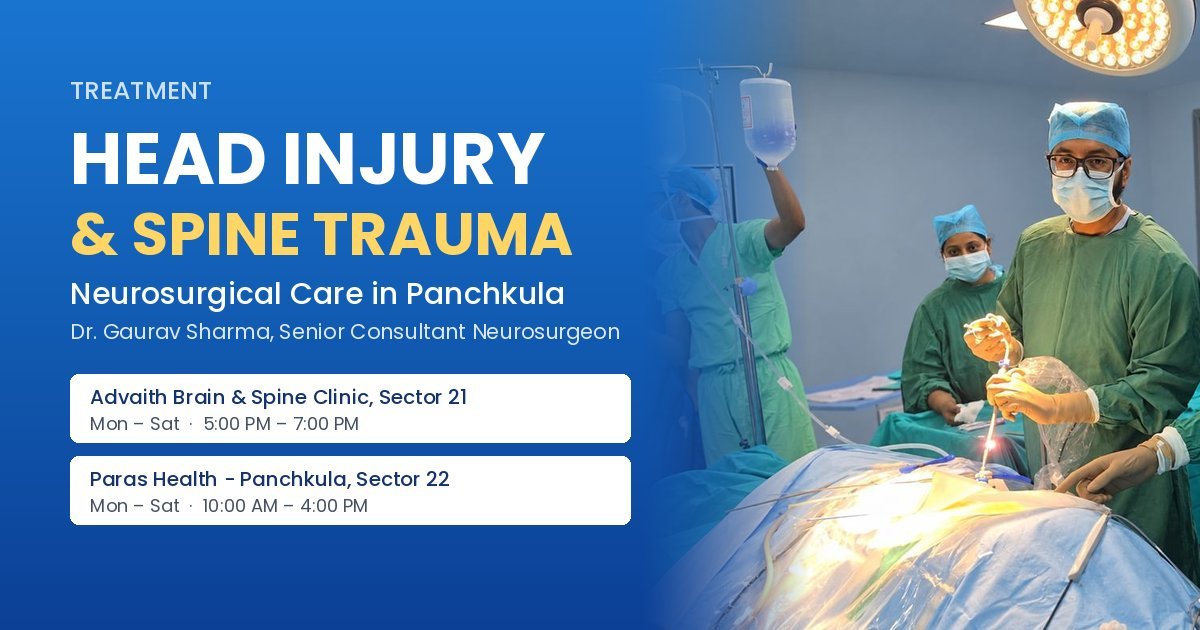
Dr. Gaurav Sharma, Senior Consultant Neurosurgeon, manages head and spinal injuries at Paras Health - Panchkula, Sector 22, together with the emergency, anaesthesia and critical care teams. This page explains what to watch for and what treatment usually involves.
Keep the person still if there is any chance of a neck injury, especially after a two-wheeler crash or a fall from a height. Don't give anything to eat or drink if they are drowsy. Call an ambulance rather than lifting them awkwardly into a car if they cannot walk.
Go to an emergency department without delay if there is:
People on blood thinners and the elderly deserve extra caution. A slow bleed called a chronic subdural haematoma can show up days or even weeks after a minor bump, often as confusion, walking difficulty or weakness that families first put down to old age.
A concussion is a temporary disturbance of brain function, usually with a normal CT scan; it needs rest and observation. A contusion is bruising of the brain itself. Bleeding can collect between the skull and the brain's covering (an extradural haematoma) or under that covering (a subdural haematoma). Some bleeds are small and are watched with repeat scans. Others press on the brain and need urgent surgery.
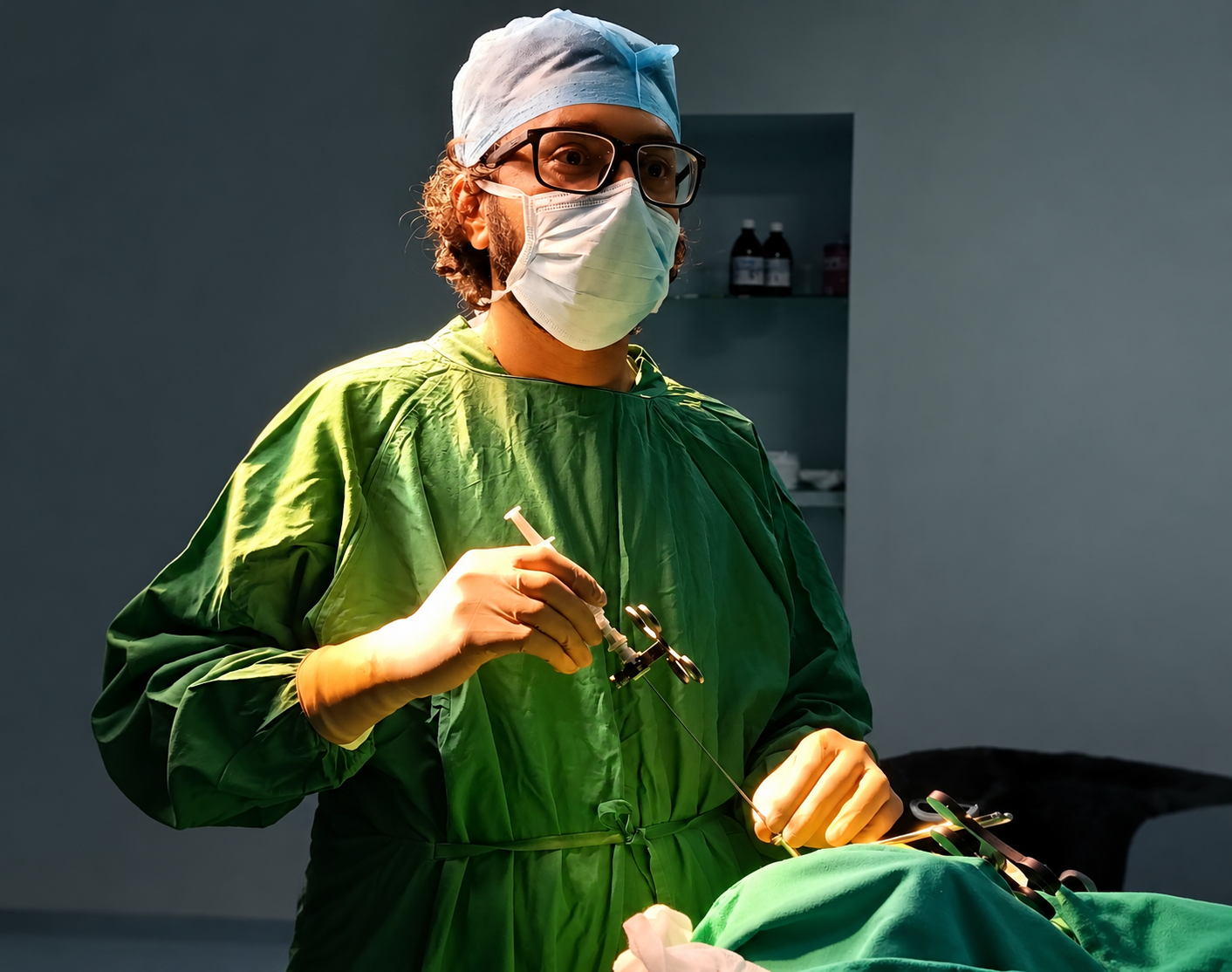
Not every patient needs an operation. Many are monitored in the ICU, with medicines to control brain swelling and repeat CT scans to make sure nothing is changing.
Neck and back injuries range from muscle strain to fractures that threaten the spinal cord. Tingling, weakness or loss of feeling below a level, and loss of bladder control, point to cord or nerve involvement. An X-ray can miss ligament damage and disc injury, so CT and MRI are often needed. Unstable fractures are fixed with screws and rods to protect the cord and allow earlier sitting and walking. Stable fractures may only need a brace and close follow-up.
Recovery after a serious head or spinal injury is measured in months. Physiotherapy, speech and swallowing therapy and support at home all matter as much as the surgery itself. Families are told honestly what to expect and when. Longer-term rehabilitation can be arranged through Advaith Ability Neurorehabilitation.
For follow-up visits after discharge, see the OPD timings below, and bring the CT and MRI films each time.
Wear a fastened, ISI-marked helmet on every two-wheeler ride, including short trips in the city. Use seat belts in front and back seats. For older family members, good lighting, grab bars in the bathroom and a review of medicines that cause dizziness reduce falls considerably.
| Location | Days | Timings |
|---|---|---|
| Advaith Brain & Spine Clinic, 1842, Sector 21, Panchkula – 134112 | Monday – Saturday | 5:00 PM – 7:00 PM |
| Paras Health - Panchkula, near Nada Sahib Gurudwara, Sector 22, Panchkula – 134109 | Monday – Saturday | 10:00 AM – 4:00 PM |
| Panchkula OPDs | Sunday | By appointment |
Phone / WhatsApp: +91-9780703819
If the person is alert, talking normally and has no warning signs, sleep is fine, but someone should check on them. If they are hard to wake, vomiting or confused, take them to an emergency department.
No. A doctor decides based on how the injury happened and the symptoms. Loss of consciousness, vomiting, blood thinners and older age make a scan more likely.
A slow collection of old blood over the brain, seen mostly in older people or those on blood thinners, sometimes weeks after a minor fall. It often needs simple burr hole drainage.
Some recovery is possible, especially if the injury is incomplete. Early treatment to protect the cord and long-term rehabilitation both play a part.