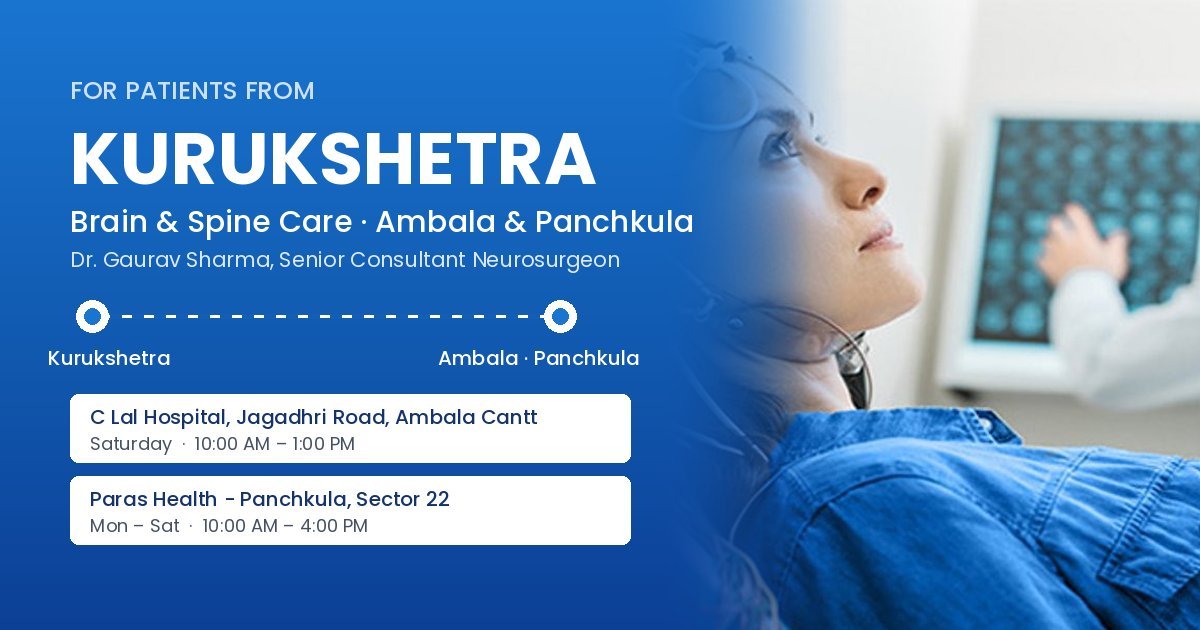
Kurukshetra draws pilgrims from across the country to Brahma Sarovar and Jyotisar, and its university brings students from all over Haryana. Thanesar, Pehowa, Ladwa and Shahabad make up a large population along and around NH-44. For neurosurgical care, families here often look north towards Ambala and the Tricity.
Dr. Gaurav Sharma, Senior Consultant Neurosurgeon, sees patients from Kurukshetra at his Saturday OPD in Ambala Cantt and at his OPDs in Sector 21 and Sector 22, Panchkula.
Strokes are common in Kurukshetra district, as across Haryana, with high BP, diabetes, smoking and hookah use all playing a part. Many patients reach hospital too late for the treatments that work well only in the first few hours. Knowing the signs can change that.
BE FAST is an easy way to remember them:
Clot-dissolving medicine is most effective within four and a half hours, and clot removal (thrombectomy) may be possible up to 24 hours in selected patients. Don't wait to see if it passes, and don't travel long distances to a familiar hospital first. More on stroke treatment and the warning signs.
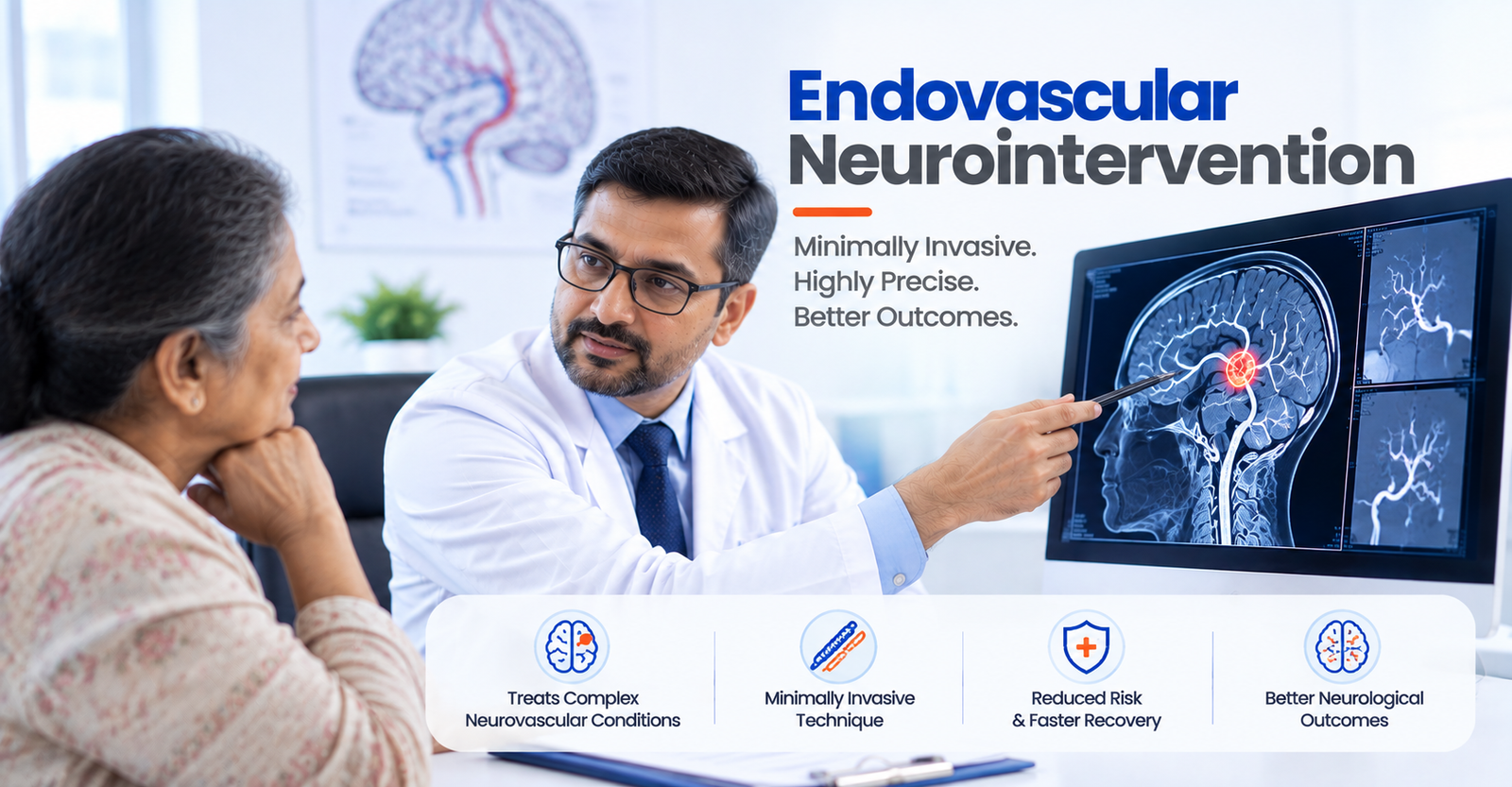
About one in four stroke survivors can have another stroke. Blood thinners, BP and cholesterol medicines, sugar control and quitting tobacco all reduce that risk, but only if they are taken regularly and not stopped without advice. Rehabilitation for movement, speech and swallowing should start as soon as the patient is medically stable.
Slip disc and sciatica, neck pain, spinal canal narrowing in older people, head injuries from accidents on NH-44 and brain tumours found on MRI. The slip disc and head injury pages explain these in more detail.
Follow-up is where many patients drop off, because the journey feels long. A few things help:
Panchkula is about an hour and a half to two hours away via NH-44 and Zirakpur, and is where admissions and surgery are planned.
Students at the university and coaching centres in Kurukshetra spend long hours bent over books and laptops, and neck and upper back pain is common among them. Most of it improves with posture correction, regular breaks and simple exercises. In the surrounding rice and wheat belt, farmers carry heavy loads and spend long hours on tractors; for them, slip disc with sciatica is a frequent problem. Pain that travels down the leg with numbness or weakness deserves a proper examination. Most people still recover without surgery, but early advice helps.
For a stroke survivor coming home, small changes make a big difference: a firm chair with armrests, a raised toilet seat, bathroom grab bars, clear walking paths and a bell to call for help. Family members should learn the BE FAST signs too, since the risk of a second stroke is real. Rehabilitation exercises taught in hospital should continue daily; recovery can keep improving for months.
| Location | Days | Timings |
|---|---|---|
| C Lal Hospital, Jagadhri Road, Ambala Cantt | Saturday | 10:00 AM – 1:00 PM |
| Advaith Brain & Spine Clinic, 1842, Sector 21, Panchkula – 134112 | Monday – Saturday | 5:00 PM – 7:00 PM |
| Paras Health - Panchkula, near Nada Sahib Gurudwara, Sector 22, Panchkula – 134109 | Monday – Saturday | 10:00 AM – 4:00 PM |
| Panchkula OPDs | Sunday | By appointment |
Phone / WhatsApp: +91-9780703819
The Saturday OPD in Ambala Cantt (C Lal Hospital, Jagadhri Road, 10 AM to 1 PM) is usually closer than Panchkula.
As soon as possible. Clot-dissolving medicine is most effective within 4.5 hours of symptoms starting.
Yes. About one in four survivors can have another stroke, which is why medicines and lifestyle changes must continue.
Admissions and surgery are planned at Paras Health - Panchkula, Sector 22.