The craniovertebral junction, or CV junction, is the meeting point of the base of the skull and the top two neck bones, C1 (atlas) and C2 (axis). It carries the lower brainstem and the start of the spinal cord, and it allows most of the head's turning movement. Problems here are not common, but when they happen they can affect walking, hand function, breathing and swallowing.
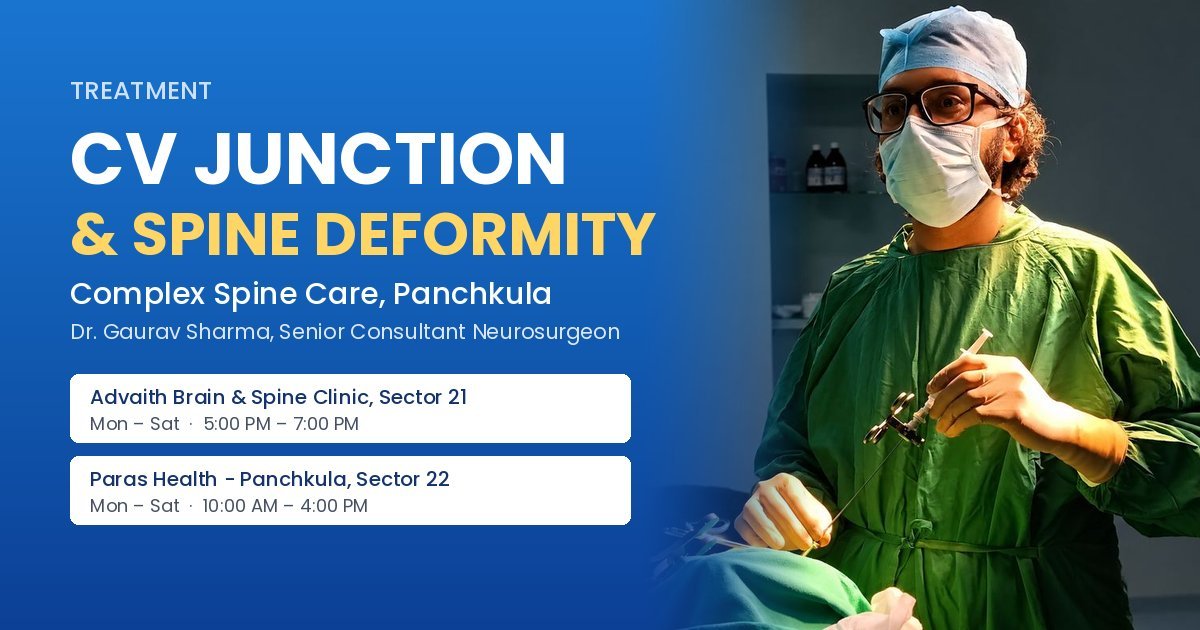
Dr. Gaurav Sharma, Senior Consultant Neurosurgeon in Panchkula, treats CV junction disorders and spinal deformities. Many of these patients are referred from other towns after years of unexplained symptoms, so the first visit is often spent simply putting all the old scans together.
C1 slips forward on C2, narrowing the space for the spinal cord. It may be present from birth, follow an injury, or result from rheumatoid arthritis or infection. Symptoms include neck pain, weakness and stiffness in the arms and legs, and unsteady walking, sometimes worsening after a minor fall.
The top of C2 pushes upward into the base of the skull and presses on the brainstem. It often comes with a short neck or low hairline and is frequently associated with Chiari malformation.
In Chiari malformation, the lowest part of the brain (the tonsils of the cerebellum) sits lower than normal, crowding the opening at the base of the skull. Headaches at the back of the head that get worse on coughing or straining are typical. Fluid may collect inside the spinal cord, forming a cavity called a syrinx, which causes loss of pain and temperature sensation in the hands, burns that are not felt, and weakness.
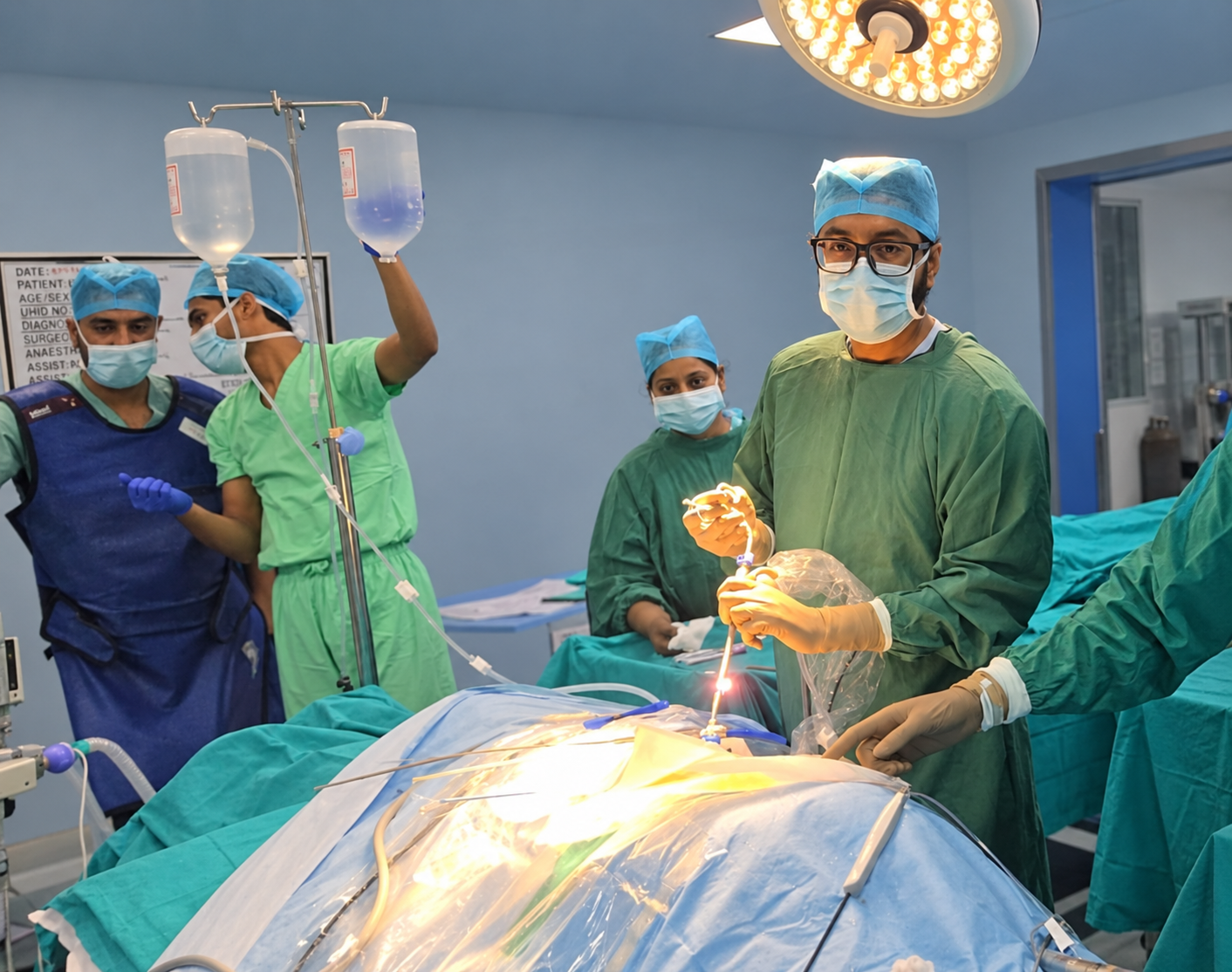
MRI shows the cord and brainstem. CT with 3D reconstruction shows the bones in fine detail, and flexion-extension X-rays or dynamic CT show whether the joint moves abnormally. A CT angiogram may be needed to locate the vertebral arteries before screws are planned, since they run very close to these bones.
The aim is to relieve pressure on the cord or brainstem and to make the junction stable.
Patients usually lose some ability to turn the head after C1-C2 fusion. Most adapt well, and this is discussed clearly before surgery.
Scoliosis is a sideways curve of the spine; kyphosis is a forward hunch. In teenagers, mild curves are often watched, and moderate curves may be braced during growth. In adults, deformity can come from disc wear, old fractures, osteoporosis or tuberculosis of the spine. Surgery is considered when the curve is progressing, causing nerve symptoms, or seriously affecting balance and daily life. Correction uses screws and rods along the curved section, often guided by neuromonitoring.
Cord damage from long-standing compression does not always recover after surgery. People with slowly increasing clumsiness of the hands, a change in walking, or neck pain after a fall with a known CV junction problem should not keep postponing a specialist visit. For common neck problems, see cervical spine treatment.
Consider a specialist opinion if a child or teenager has uneven shoulders, a hip that sticks out on one side or a hump on bending forward; if an adult is becoming increasingly bent forward or leaning to one side; or if there is neck pain with progressive hand clumsiness and unsteady walking, particularly with a short neck or low hairline. Bring every scan and X-ray taken over the years, since comparing them shows whether the condition is progressing.
| Location | Days | Timings |
|---|---|---|
| Advaith Brain & Spine Clinic, 1842, Sector 21, Panchkula – 134112 | Monday – Saturday | 5:00 PM – 7:00 PM |
| Paras Health - Panchkula, near Nada Sahib Gurudwara, Sector 22, Panchkula – 134109 | Monday – Saturday | 10:00 AM – 4:00 PM |
| Panchkula OPDs | Sunday | By appointment |
Phone / WhatsApp: +91-9780703819
It is complex surgery close to the brainstem and spinal cord, so it is planned carefully with detailed CT and MRI. The specific risks are discussed with each family before deciding.
Side-to-side turning reduces, but nodding movement is mostly kept. Most people manage daily activities, including driving, after recovery.
No. Chiari found by chance without symptoms or a syrinx is usually watched. Surgery is advised for troublesome symptoms or a growing syrinx.
There is no single number for everyone. Progression, age, symptoms and balance all count, and many curves are managed with observation or bracing.