A brain stroke can happen suddenly. A person may be perfectly fine one moment and, within minutes, have trouble speaking, walking, seeing, or moving one side of the body. Because stroke affects the brain's blood supply, getting medical help quickly is extremely important.
The difficult part is that many people don't immediately realise that what they are seeing is a stroke. They may think the weakness will pass, or that the speech problem is just tiredness. Knowing the warning signs can help you recognise an emergency and act without delay.
What is a brain stroke?
A stroke happens when the blood supply to part of the brain is blocked or when a blood vessel in the brain bleeds. Brain cells depend on a steady supply of oxygen, so an interruption in blood flow can cause damage in a short period of time.
Stroke symptoms depend on the area of the brain that is affected. They can look different from one person to another, but one thing is important: they often begin suddenly.
Early warning signs of brain stroke
Keep an eye out for sudden changes. Some of the most common warning signs include:
1. Sudden weakness or numbness
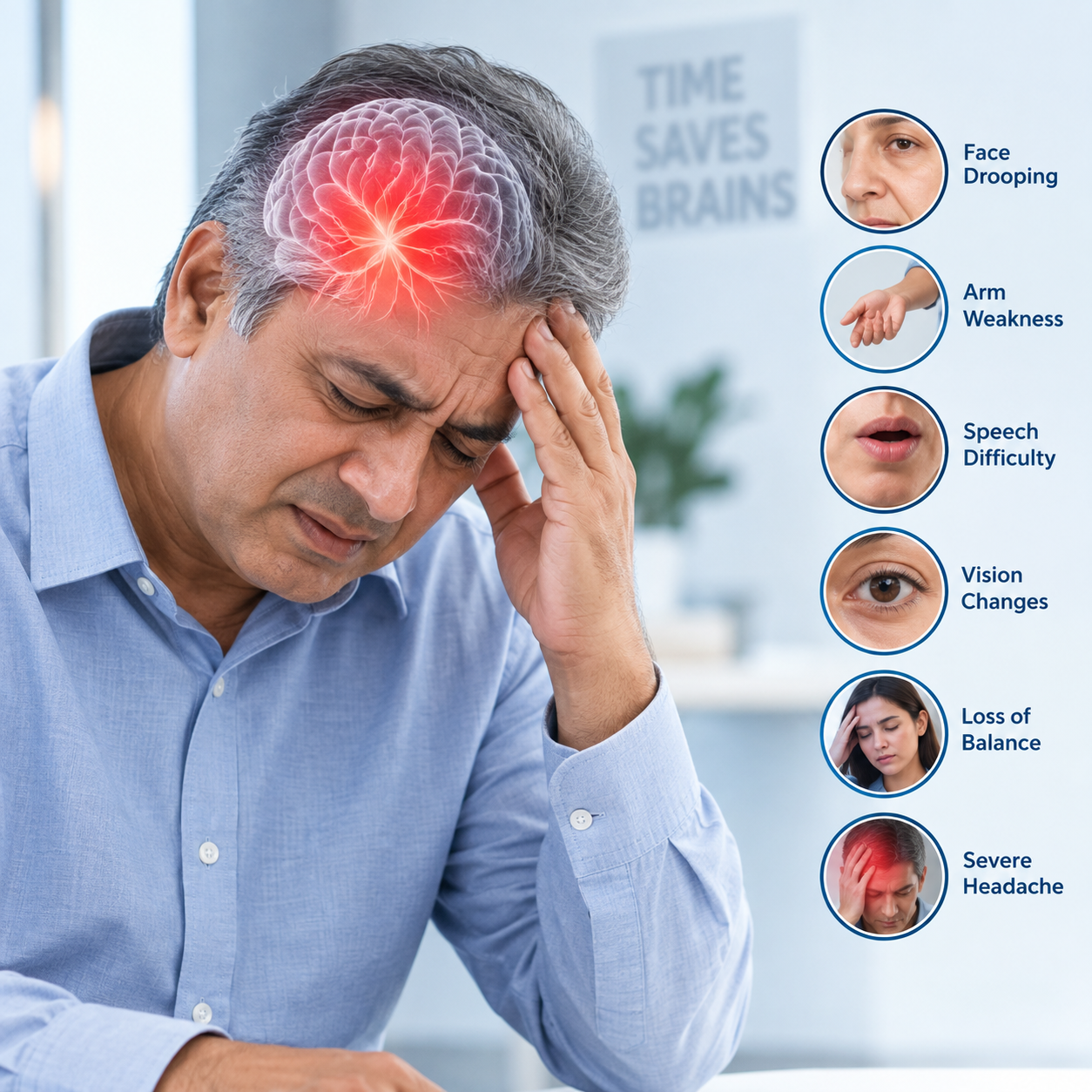
One side of the face, arm, or leg may suddenly feel weak or numb. A person might struggle to lift one arm, hold an object, or walk normally.
2. Facial drooping
Ask the person to smile. If one side of the face appears to droop or the smile looks uneven, it could be a sign of stroke and should not be ignored.
3. Trouble speaking or understanding
Sudden slurred speech, difficulty finding the right words, confusion, or trouble understanding simple sentences can be an important warning sign.
4. Sudden vision changes
Some people experience sudden blurred or double vision, while others may have partial or complete loss of vision. A sudden change in eyesight needs urgent medical attention.
5. Loss of balance or coordination
Sudden dizziness, difficulty walking, loss of coordination, or an unexplained tendency to fall can sometimes be linked to a stroke.
6. Sudden severe headache
A sudden, unusually severe headache, especially when it comes with other neurological symptoms, can be a warning sign and should be assessed urgently.
"When stroke symptoms appear, don't wait to see if they settle down. Getting medical help quickly is one of the most important things you can do."
Remember B.E. F.A.S.T.
One simple way to remember the main signs of stroke is B.E. F.A.S.T.:
B – Balance: Sudden loss of balance or coordination.
E – Eyes: Sudden changes in vision.
F – Face: One side of the face may droop.
A – Arms: Sudden weakness or numbness in an arm.
S – Speech: Speech may become slurred or difficult to understand.
T – Time: Time to seek emergency medical help immediately.
What should you do if you notice these symptoms?
Don't wait for the symptoms to become more obvious. If you notice sudden stroke-like symptoms, seek emergency medical care immediately. Make a note of when the symptoms first started, as this information can be useful to the treating medical team.
If emergency medical services are available, use them rather than trying to manage the situation at home. Stroke needs proper medical assessment, and treatment depends on the type of stroke and how long ago the symptoms began.
What if the symptoms disappear?
This is something people often underestimate. Stroke-like symptoms that disappear after a short period can be a transient ischemic attack, commonly called a TIA. Even when the person feels normal again, it still needs urgent medical evaluation because it can be a warning of a future stroke.
Who is at higher risk of stroke?
Stroke can happen at different ages, but some factors increase the risk. High blood pressure, diabetes, high cholesterol, smoking or tobacco use, obesity, certain heart conditions, previous stroke or TIA, and increasing age are among the factors doctors consider.
Regular health check-ups and proper management of conditions such as blood pressure and diabetes can help reduce stroke risk. Staying physically active, eating a balanced diet, avoiding tobacco, and maintaining a healthy weight are also important parts of a healthy lifestyle.
Why acting quickly matters
Stroke treatment depends on the type of stroke, when the symptoms started, and the patient's individual condition. Some treatments are time-sensitive, which is why delaying medical care can mean losing valuable treatment time.
If you suspect that someone is having a stroke, treat it as an emergency rather than waiting for the symptoms to improve on their own.
The bottom line
Stroke doesn't always announce itself with dramatic symptoms. Sometimes it starts with a weak arm, an uneven smile, difficulty speaking, sudden vision changes, or trouble walking.
Remember B.E. F.A.S.T. and act quickly. If you notice sudden symptoms that could indicate a stroke, seek emergency medical attention immediately — even if the symptoms start getting better.
At Paras Health Panchkula, timely assessment and specialised neurological care are important parts of managing patients with suspected stroke. If you notice possible stroke symptoms in yourself or someone around you, do not delay seeking emergency medical help.